Showing posts with label glacier. Show all posts

Using an Iceberg as a Stand Up Paddle Board

Using an iceberg as a stand up paddle board Perito Moreno Glacier Patagonia

Grab an oar, jump on an iceberg and go for paddle board!
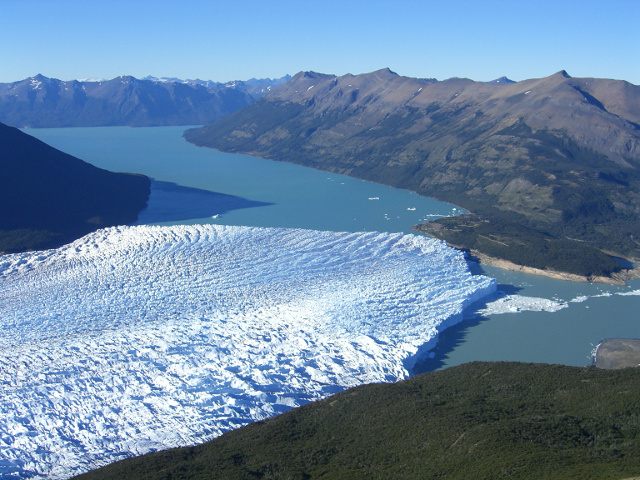

mountain side view of perito moreno glacier argentina patagonia
The Perito Moreno Glacier in Patagonian Argentina is our amazing backdrop to the new extreme sport of stand up iceberg paddling! Find more photos and videos below:

Subscribe to my channel -


How fast can you paddle an iceberg?

Not very fast! One thing to remember is that 90% of an icebergs mass is below water. To support an 80kg person with a body weight of ice as free-board, you are talking about an iceberg weighing approximately 1.5 metric tons. To move an object that massive through the water would require some serious power, and I found that my little paddle was next to useless. I was much more at the mercy of the wind and the water currents.
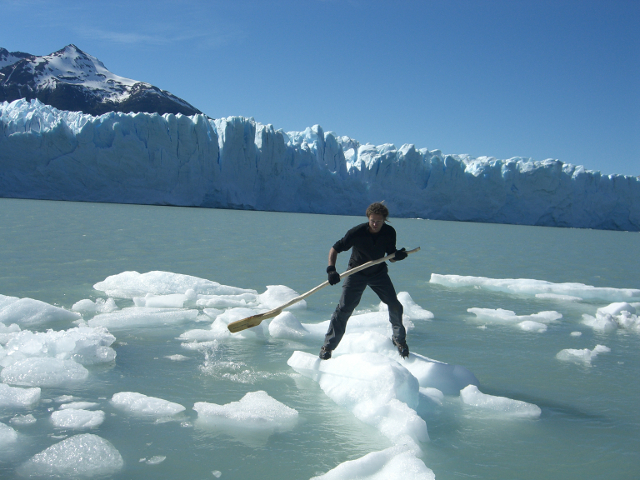
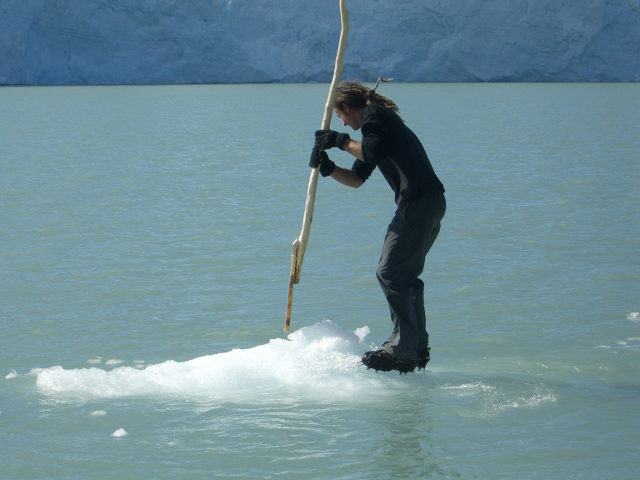
Using an iceberg as a stand up paddle board Perito Moreno Glacier Patagonia man rowing an iceberg on a lake in Patagonia

Is it dangerous to stand on icebergs?

These very very small icebergs. Yes I risk going for a swim, but I am accustomed to swimming in cold water and was not very far away from the shore. I have worked on glaciers all over the world and I am always thinking of fun things to do. This next video shows my first expedition jumping on icebergs when a whole bunch of drifted near the shore:


I did fall into the water!

Yeah, I sure did! The piece I landed on was thin and broke off when I landed on it. Fortunately I was able to hang onto the 'berg and scramble up. After having fun on this adventure I came up with the idea of making a "rema-tempano" which means "iceberg rower" in english.

Person Standing on an Iceberg Perito Moreno Glacier Patagonia

Any plans for more iceberg fun?

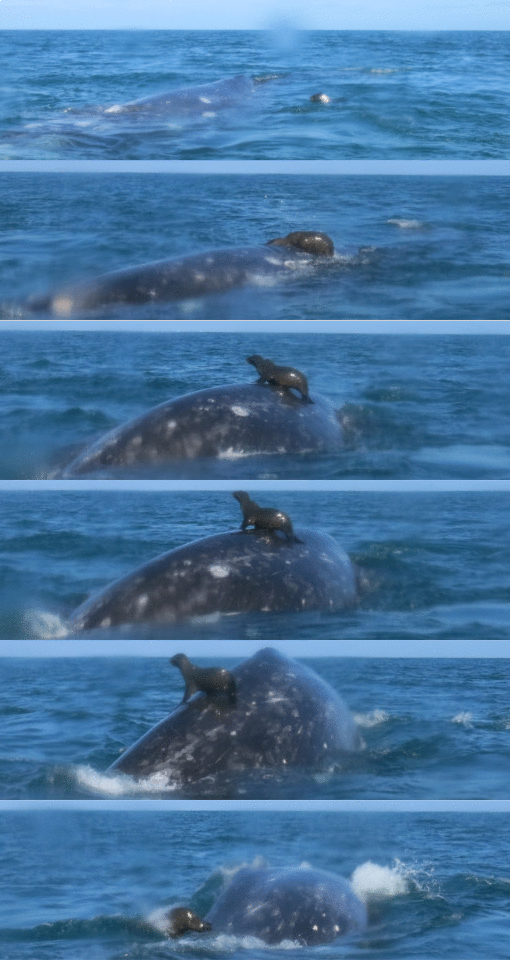
I don't work on glaciers any more, but I would love to go back and film some similar adventures in HD. Check out some of my blog posts on Antarctica or check out our amazing ultimate whale video below (that is filmed in HD) that includes clips such as a seal riding a whale:
An Antarctic Oasis - The McMurdo Dry Valleys

The McMurdo Dry Valleys in Antarctica are one of the worlds most extreme deserts and are said to have an environment closer to that of the planet Mars than any other place on earth. With a rocky and barren landscape battered by extreme katabatic winds, the dry valleys provide an interesting if not hostile backdrop for many science projects over the antarctic summer.

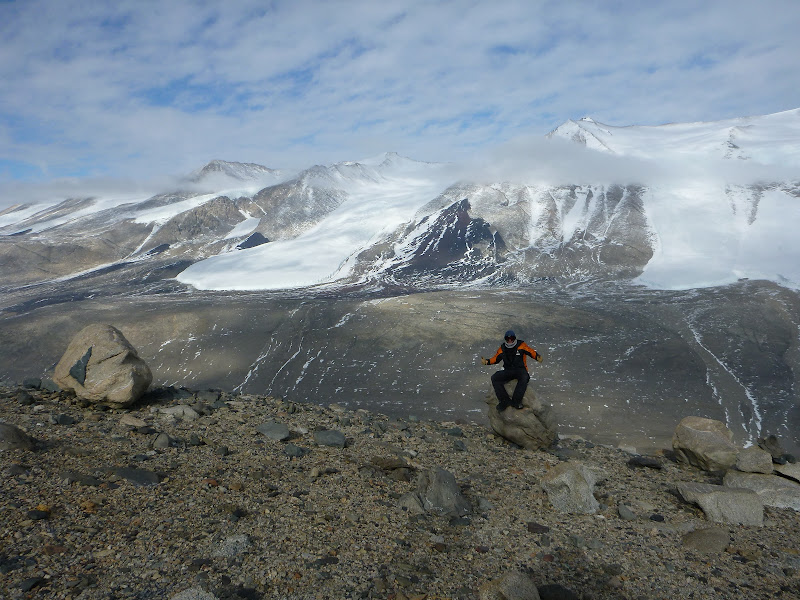
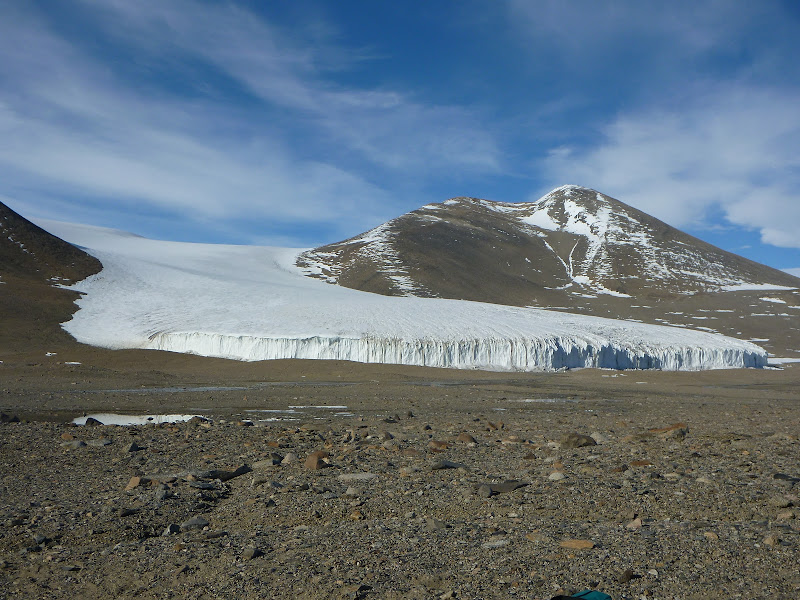
Glacier Taylor Valley McMurdo Dry Valleys

Glaciers and Rock

I have been lucky enough to visit the dry valleys on 3 occasions where I have captured images of the valleys during different conditions. The photo above shows the contrast between a teardrop shaped glacier and the dry rocky ground. My video below shows spectacular helicopter footage of the Dry Valleys during a rare moment when there is "lots" of snow on the ground, and the glaciers are less distinguishable:


Antartic Dry Valleys by Helicoper


This video was shot while conducting maintenance on Antarctica New Zealand's three radio repeater sites. These sites are used to relay radio communications between science teams operating in the Dry Valleys and the Antarctica New Zealand base on Ross Island. Because it was early in the summer season the temperatures were rather cold with wind chills at Mt Mule getting below -40C (also -40F)

Map of the Dry Valleys


A satellite view of the McMurdo Dry valleys, the McMurdo Sound and Ross Island along with the route of the helicopter and locations of the radio repeater sites. It is worth zooming in to the Dry Valleys and exploring the martian-like landscape.

Taylor Valley McMurdo Dry Valleys
Me sitting on a rock at the JJ Thomson site (start of the video) with the glaciers coming down into Taylor valley in the background.

mummified weddell seal mcmurdo dry valleys

Mummified weddell seals


This photo shows one of the famous mummified weddell seals of the Dry Valleys. There are apparently hundreds of specimens that have crawled up to 41 miles inland and to elevations up to 5,900 feet above see level. Why these seals have wandered so far from the ocean has remained a mystery.


wildlife of antarctica
Spectacular images and videos of Antarctic animals.